
 Buy me a coffee?
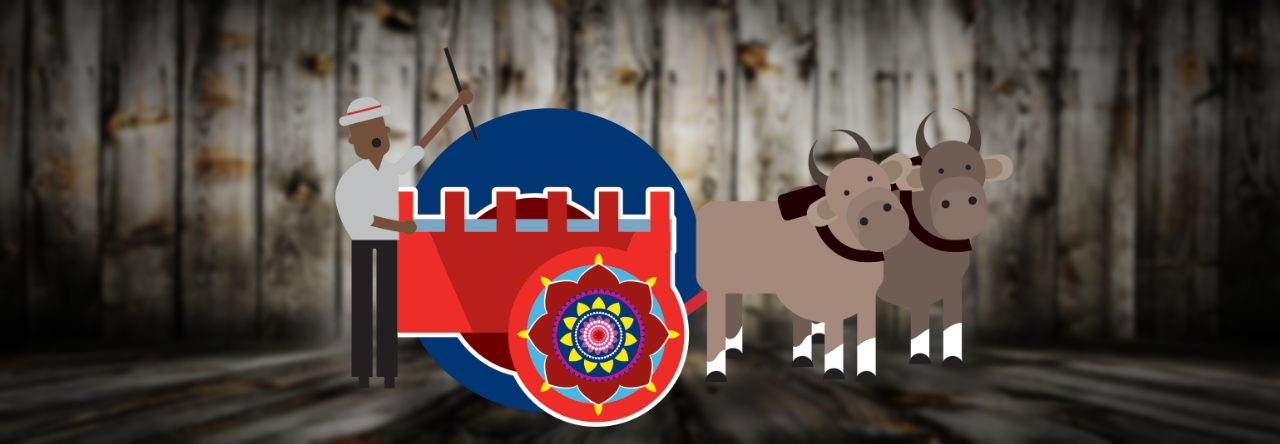

If you ever spot a brightly painted wooden cart trundling along behind two oxen in Costa Rica, don’t worry, you haven’t time-travelled to Little House on the Prairie. What you are looking at is the carreta, the original Costa Rican pickup truck. Sure, it doesn’t have Bluetooth, heated seats, or a spot for your double-double, but for over a century it was the backbone of the country’s economy.
Back in the 1800s, Costa Rica’s Central Valley was swimming in coffee beans. The problem was getting those beans to the port at Puntarenas. Forget asphalt or paved highways; they had mud, mountains, and rivers deep enough to swallow a horse whole. Enter the oxcart, a wooden tank on wheels. It didn’t go fast, but it went anywhere. Think of it as a 4×4, minus the “x4,” the leather interior, and the warranty.
A trip to the coast could take two weeks. That’s longer than most Canadians last in Mexico before they start craving poutine. Families would camp beside their carts, the oxherd (called a boyero) sang to his team, and everyone prayed the cart’s solid wooden wheels wouldn’t splinter halfway through the jungle. You might complain when your Amazon package is late, but imagine waiting fifteen days for your coffee beans just to reach the boat.
And because humans can’t resist decorating their toys, the carretas eventually got a makeover. Farmers started painting them in wild colours and patterns, partly so they could tell whose cart was whose, and partly because why not? Picture the world’s first rolling art show, composed of campesinos with buckets of paint. Some of the designs look like kaleidoscopes on steroids (remember those?), and today UNESCO even lists them as cultural heritage.
Now, you might ask, why stick with oxen when trucks came along? Well, oxen run on grass, not gas. They never need oil changes, and if you leave them in a field overnight, they’ll happily recharge themselves. Try that with your Silverado. They were slower than a Leafs playoff run, but at least they always finished the job.
Nowadays you’ll see oxcarts mostly in parades and festivals, especially in the central valley town of Sarchí, the hometown of cart-painting. Tourists flock there to admire the giant decorated cart in the park, and you can even buy a mini one to stick on your shelf back home. Farmers still use them here and there for short hauls, but mostly they’re cultural showpieces, proudly wheeled out on National Boyero Day every March. In 1988, the carreta was officially named a National Symbol of Work, which seems appropriate. If any tool deserves a gold watch for years of service, it’s this one.
For us North Americans, the closest comparison would be if your granddad’s rusted-out Chevy farm truck became a national icon. Imagine the government declaring, “From now on, we will celebrate the Chevy 3100 as a symbol of our perseverance!” and then painting it in rainbow colours before driving it down Main Street. That’s basically Costa Rica and the carreta.
So the next time you see one, don’t dismiss it as a pretty cart for tourists. It’s history on wheels, a reminder that hard work, creativity, and a couple of stubborn oxen can move a country forward. And unlike your SUV, the carreta has never once been recalled.
Note: Here’s a video that I took in Atenas back in May 2025.




Leave a Reply