
 Buy me a coffee?

There are moments in life when a simple object ends up teaching a far deeper lesson than any long lecture ever could. We’ve all heard metaphors about sticks and stones, bridges and walls, but every now and then something as ordinary as a sheet of paper can deliver a truth sharp enough to stop you in your tracks. I came across a story like that long ago, and while the details vary depending on who tells it, the heart of it remains the same. Here is my own take on that lesson, one we still haven’t fully learned.
The Teacher’s Lesson
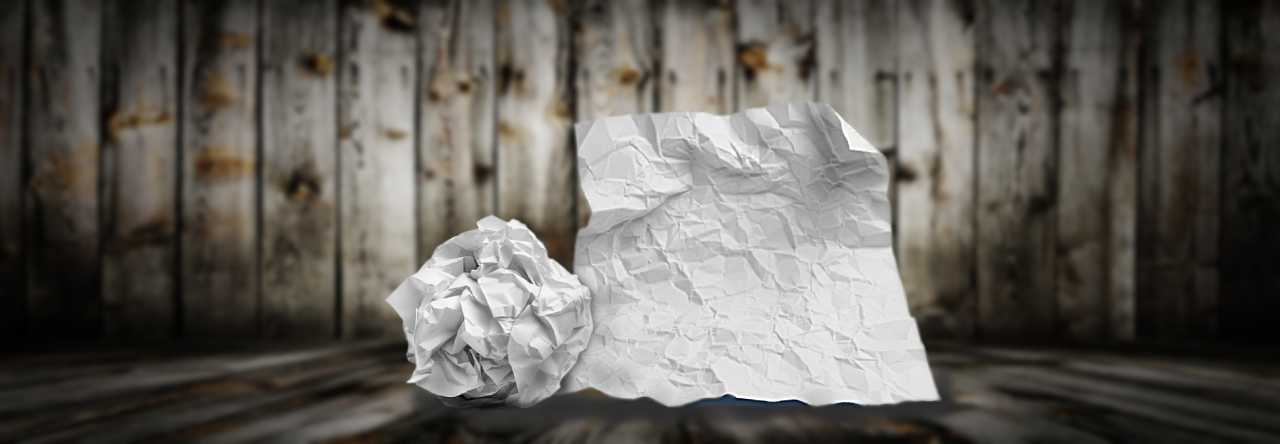
A teacher walked into her classroom one morning holding a stack of clean white paper. No lecture notes. No textbook. Just paper. The students glanced at one another, already curious. She handed each of them a sheet and said, I want you to ruin it.
They looked at her as if she had finally snapped, but she nodded, encouraging them. So the room filled with the sound of rustling and crunching as every student balled up their sheet, squeezing it tight. Some twisted it into knots. One kid even stepped on his for good measure.
Once every sheet was reduced to a crumpled mess, the teacher spoke again. Now try to make it look new.
They did their best. They pulled the folds apart, smoothed the edges, pressed their palms flat against the surface. Some even ran their sleeves over the paper like makeshift irons. But when they were done, each sheet still showed deep wrinkles, lines running through it like old scars that refused to fade.
The teacher walked between the desks, lifting a few sheets and holding them to the light. No matter how much work they had put into flattening them, not one piece of paper looked the same as when she handed it out.
She finally said, This is what happens when we hurt someone. You may apologize. You may try to undo the damage. But the marks remain long after the moment has passed.
She didn’t add anything else. She didn’t need to. They understood.
The Lesson We Still Haven’t Learned
That little exercise should have travelled with us into adulthood, but somewhere between dial-up internet and the chaos of comment sections, we forgot it. Today, people crush one another with a single sentence. They fold, wrinkle, and stomp on someone’s dignity because it takes five seconds to type and zero courage to press send.
On social media, cruelty gets masked as comedy. Sarcasm becomes sport. Entire arguments erupt under posts that had nothing to do with the insults people start hurling. And the worst part is how easy it is to justify it. After all, it’s just a username, right? Just an avatar. Just a stranger.
But strangers feel things too, whether you see the reaction or not. The crease is there. It just doesn’t show up on your screen.
Deleting the comment doesn’t smooth anything. Pretending it wasn’t that bad doesn’t flatten the damage. Words land. Marks stay.
Conclusion
If you need the safety of a screen to be bold, you’re not bold. And if your joke depends on hurting someone else, it’s not a joke. It’s a warning sign about the person telling it.
The teacher’s message wasn’t about paper. It was about responsibility. About understanding that our words carry weight, even when they look light on a phone screen. So before you fire off that clever insult or sharpen your sarcasm in someone’s comment section, pause for just one second.
Ask yourself this.
Are you about to leave someone stronger, or are you about to leave another wrinkle that never truly fades?
Because every one of us holds a piece of someone else’s paper. And what we do with it shows exactly who we are.
Similar post: Story Of The $100 Bill

Leave a Reply