
 Buy me a coffee?
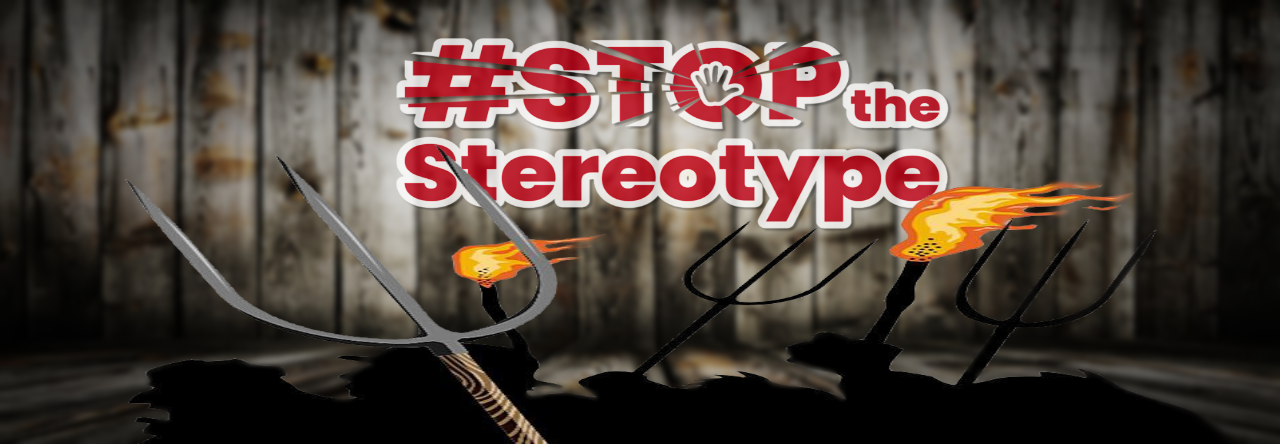

We live in a world obsessed with labels. Not the simple, practical kind that help you sort laundry or organize your pantry, but the kind that puts people into boxes, sometimes before you’ve even met them.
You see it everywhere: Boomers are rigid, Gen Xers are cynical, Millennials are entitled, Gen Zers are fragile. Religions get shorthand phrases that reduce centuries of faith to a stereotype. Sexual orientations are twisted into caricatures. And new words constantly sprout, designed to capture an idea of a person that may not exist at all. Words like “woke,” “Karen,” “Chad,” or “libtard” have gone from niche slang to cultural weapons.
Because I respect what Mark Carney is doing and call out the antics of Pierre Poilievre, Danielle Smith, and Donald Trump, I get labelled a “libtard.” The truth is, I have voted for just about every party over my lifetime, including the Conservatives. Slapping on a label like that is just stereotyping, an easy (and lazy) way out for those who would rather categorize instead of seeing the human side.
Psychologists would tell you there’s a reason we do this. Humans crave cognitive shortcuts. Our brains love patterns; they like certainty, the illusion that we understand something or someone quickly. Categorizing is comforting because it simplifies a complex, often frightening social landscape. But it’s only comforting if you stop asking questions, if you stop seeing people as full beings rather than convenient containers.
The problem is that this categorizing is rarely neutral. Once we assign a label, we start judging according to it. It’s no longer descriptive; it’s prescriptive. It tells us how we should feel about someone without ever talking to them.
Boomers are blamed for economic woes, Millennials for cultural shifts, Gen Z for moral panic. Conservatives are painted as uncaring, progressives as intolerant. Political factions exploit this. Fear is amplified by division. If you can convince a group that another group is dangerous, lazy, or wrong, it’s easier to control the conversation, shape the narrative, or rally votes. Labels become tools, and people become targets.
Take Christianity, for example, and the newer issue of Christian nationalism. In today’s political climate, a growing narrative portrays Christians as backward, intolerant, or even harmful. Yet the overwhelming majority of those who follow Christ quietly live lives of service, compassion, and integrity. The actions of a few, who conveniently hide behind the label while committing acts of cruelty or deceit, are used to define the many. This selective spotlight ignores the countless silent examples of people living according to Christ’s teachings, doing good deeds, helping neighbours, and giving without recognition. Judging the whole based on the misdeeds of a few is exactly the kind of categorical thinking that poisons understanding.
Social media magnifies it. Algorithms reward outrage, ridicule, and exaggeration. A post mocking “Gen Z TikTok habits” or branding conservatives as extremists spreads faster than thoughtful discussion. You’re either a hater or an apologist; nuance is punished. Political pundits, influencers, and news cycles all play a role, reinforcing the idea that people are nothing more than the labels we slap on them. And so, we keep inventing new words, new categories, to satisfy this hunger to simplify, to judge, to conquer.
The moral here is quiet but essential: humans are not categories. We are not generational stereotypes, not the sum of our political or cultural preferences, not the caricature of a social media trend. We are flawed, evolving, contradictory creatures, and we deserve the dignity of being understood as such. The need to catalogue and condemn is, in the end, a refusal to meet someone as a person. It is fear dressed as clarity, division disguised as knowledge.
If we want to live in a world that is less hostile, less shallow, we must resist it. Question the categories, challenge the words, refuse to assume the story of someone’s life based on a label. Listen, watch, learn. And, most importantly, remember that every human is more than a headline.


Leave a Reply