
 Buy me a coffee?
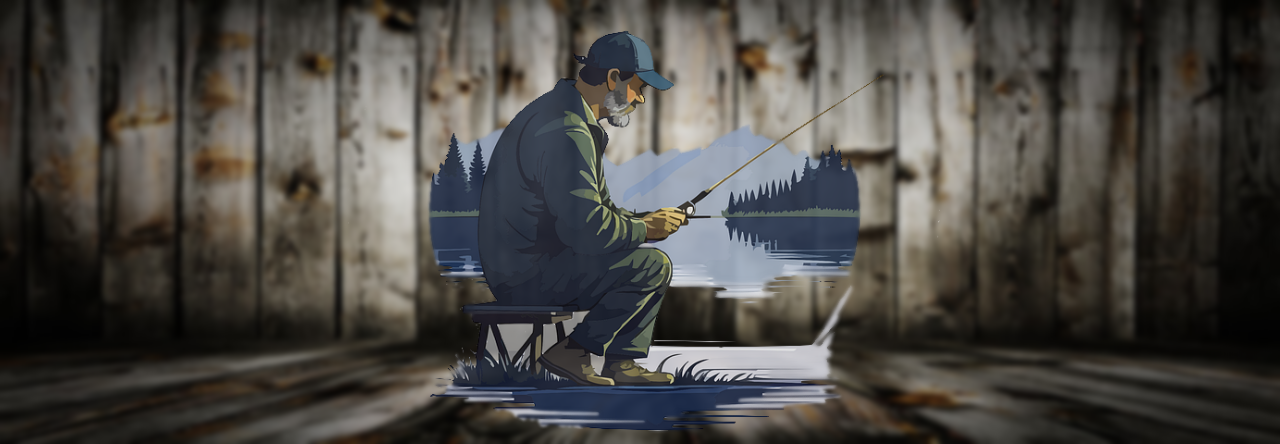

Earl Bouchard could outtalk a flock of geese on a foggy morning.
At sixty-three, the lifelong fisherman from a small village along the St. Lawrence had a voice as weathered as driftwood and just as difficult to escape. If there was a quiet moment to be had, Earl considered it wasted time. He talked over breakfast, while pumping gas, standing in line at the general store, and especially while fishing. In fact, he was convinced that fish bit more often when they were properly entertained.
“You’re not fooling me, old boy,” he’d say while casting into the reeds. “I’ve been chasing your family since Trudeau had sideburns, and if your grandfather couldn’t outsmart me, neither will you.“
His friends had learned to accept Earl for who he was. Marcel often joked that spending an afternoon in a boat with him was like sitting beside a radio with a broken volume knob. Earl always carried a portable speaker with him anyway. Country music accompanied the launch, sports radio filled the ride to his favourite spot, and if the batteries died, well, Earl was more than capable of carrying the conversation all by himself.
One particularly calm morning, as the river reflected the rising sun like a sheet of polished glass, Marcel finally asked the question everyone had wondered for years.
“Doesn’t the quiet ever bother you?“
Earl chuckled as he reeled in an empty line. “The quiet is where thoughts live,” he said. “And some thoughts are better left homeless.“
The two men laughed, but Marcel noticed something in his friend’s eyes. There was a truth hiding behind the humour, tucked away like an old photograph in the back of a drawer.
You see, silence had been chasing Earl for years, and he had become remarkably skilled at staying one step ahead of it. It waited for him after his divorce two decades earlier. It sat patiently beside him after his daughter moved to Alberta and called less often as life became busier. It lingered in the corners of his home after retirement, when the house suddenly seemed larger and the days considerably longer. Earl had spent much of his life outrunning silence with noise, conversation, engines, radios, and an endless stream of words.
Then came the storm.
It arrived in late October, when experienced fishermen know better than to tempt Mother Nature but often do it anyway. One moment the lake was calm and manageable, the next it had transformed into a snarling beast, tossing Earl’s fourteen-foot aluminum boat around like a toy in a bathtub. He had insisted on staying out for “just one more hour,” a phrase responsible for more trouble among fishermen than bad weather itself.
As he struggled with the anchor, a deafening crack of thunder exploded almost overhead. Earl remembered the blinding flash, the violent roll of the boat, and the icy water. By the time rescuers found him clinging to the overturned hull near shore, he was cold, exhausted, and unable to hear a single thing.
The doctors called it severe auditory trauma. Hearing aids offered little improvement, and specialists spoke in cautious tones about possibilities rather than promises. For a man who had spent his entire life filling every moment with sound, the silence felt less like a condition and more like a prison sentence.
The first few months were difficult. Earl sat in his living room reading closed captions and feeling as though the world had moved several steps away from him. He missed music. He missed laughter. He even found himself missing Marcel’s terrible jokes, which was perhaps the greatest tragedy of all.
But life has a curious way of teaching us lessons we’d never willingly sign up to learn.
One winter morning, Earl carried a thermos of coffee down to the frozen river and sat alone on an old wooden bench. Snow drifted lazily from the sky, and for the first time in decades, there was no radio to turn on, no conversation to start, and no noise to chase away the emptiness. As he sat there, he began to notice things he had somehow overlooked for years.
He noticed the way the morning light painted the snow in shades of gold and blue. He noticed how his granddaughter’s eyes lit up when she beat him at cards. He noticed the comfort of sharing a room with someone without feeling obligated to fill every empty space with words. Most surprising of all, he realized that silence was not empty. It had been patiently waiting for him all along, carrying gifts he had spent a lifetime refusing to open.
Silence, it turned out, was full of reflection, gratitude, and truths that had quietly accumulated over the years while Earl was busy talking over them.
The following spring, Marcel found him sitting in his boat at the dock, staring across the water. The two old friends remained there for nearly two hours without speaking. Before leaving, Earl pulled a notepad from his jacket pocket, scribbled a few words, and handed it to Marcel.
“I finally hear what matters.“
Most of us are a little like Earl, if we’re willing to admit it. We keep the television on in empty rooms, scroll endlessly through our phones, and fill our lives with enough noise to drown out our own thoughts. Silence makes us uncomfortable because it asks difficult questions and has a habit of revealing things we’d rather ignore.
Yet silence is rarely the enemy. More often than not, it is a patient teacher, waiting quietly in the corner until we’re finally ready to listen. And sometimes, the most important lessons we will ever learn are the ones that never make a sound.




Leave a Reply